Zero Belief Safety With A Hardware Root Of Belief
When deciding on a microcontroller for our product, we should ensure that we will permanently “burn-in” important information utilized by the Root-of-Trust corresponding to an organization private key. This offers another approach to verify the user’s identification without treating the typing biometric end result as the one supply of belief. TypingDNA Verify 2FA uses Root of Trust on this authentication context for its Commonplace integration. Earlier Than typing biometrics are used for verification, the organization verifies the user’s cellphone number or email tackle because the Root of Belief.
Discover Content
In NHI environments, it might be a hardware safety module, a platform belief anchor, a certificate authority, or a tightly controlled signing authority that establishes what is genuine and what is not. In summary, the hardware TPM plays a crucial position in offering a secure basis for computing systems. It presents safe storage for cryptographic keys, supports https://www.yaldex.com/Bestsoft/Software_Development.htm key era and administration, enables distant attestation, and ensures the integrity of the system via safe boot processes.
Solutions By Industry
- It makes key extraction much tougher, however risks remain if attackers exploit firmware flaws, weak authentication, poor recovery processes, or insecure administrative entry.
- Figuring Out your explicit belief roots can help to mitigate any potential harm by knowing what to exchange when that trust is lost.
- In today’s world of cloud computing, hybrid cloud environments and edge computing, you won’t all the time be able to management the bodily safety of your systems.
- It is typically a hardware-based component or set of elements which might be inherently trusted.
- Whereas a TPM is a dedicated chip that provides specific, targeted functionality as a hardware root of belief, a Trusted Execution Setting (TEE) takes a completely different approach.
In cybersecurity, a Root of Belief (RoT) is an inherently trusted hardware, firmware, or software program component that performs crucial security features. A Root of Belief offers a trusted foundation on which other safety mechanisms can rely, including safe boot, cryptographic operations, integrity verification, and system authentication. The Basis of Belief (RoT) serves because the cornerstone for establishing belief in modern telecommunication infrastructures, making certain integrity and trust across distributed, latency-sensitive networks similar to 5G, 6G, and the Web of Things (IoT). We propose a novel taxonomy categorizing RoT solutions by core functionalities–secure boot, attestation, secure storage–and consider their contributions to achieving important safety targets similar to confidentiality, integrity, and authentication. Via rigorous analysis, we establish the restrictions of hardware-centric options in resource-constrained environments and explore the potential of software-centric alternatives to overcome scalability and flexibility challenges. Moreover, we outline open analysis challenges and provide design principles for developing a sturdy SRoT.
Edge Computing
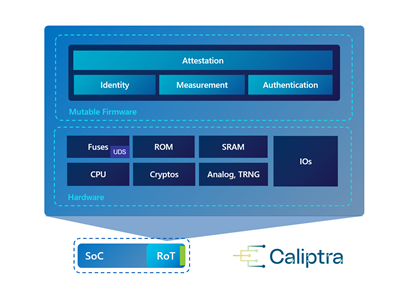
It supplies a novel and unforgeable basis from which a tool builds its security structure and authenticate each computing layer, from hardware to application. This is much like our personal unforgeable biometric identification, such as our fingerprints, from which other forms of identification may be rooted. Open-source implementations like Caliptra and OpenTitan provide an adaptable framework where PQC could be integrated into the safe boot chain and attestation flows. Their transparency and replace mechanisms be certain that as PQC standards evolve, the RoT stays related for gadgets over decades, even towards quantum-capable adversaries. Open-source RoTs are developed by collaborative ecosystems, typically backed by industry leaders, lecturers, and startups.
]]>Functions Of Dna Cryptography
DNA cryptography and steganography are used as carriers by utilizing the bio-molecular computing properties that have become extra frequent in recent years. This examine examines recently printed DNA steganography algorithms, which use DNA to encrypt confidential data transmitted via an insecure communication channel. A Quantity Of DNA-based steganography strategies might be addressed, with a focus on the algorithm’s advantages and drawbacks.
Keywords
- As DNA cryptography’s strategies usually are not mathematically coded, they may be too secure to be simply broken.
- The proof of idea was carried out beneath actual situations through the travel of the President of the Republic to Japan on April 1, 2026, based on a preprint deposited in an open-access archive.
- Curiously, 1021 DNA bases-or 108 TB of data-can be present in one gramme of DNA.
- In Accordance in28, the variations in these base sequences generate genetic diversity and underpin DNA’s unique replication process.
- This transformation is essential for producing pseudorandom sequences as secret keys for encryption and decryption.
A comparison of the strengths and weaknesses of DNA steganography strategies. The human physique is made up of trillions of cells, each with its function. As seen in Figure 3, each cell has a nucleus that includes a quantity of chromosomes. The majority of DNA is present in a nucleus, which is named nucleus DNA, and the rest is found in mitochondria, which is called mitochondria DNA (mtDNA). A gene is the complete genetic makeup of an organism, containing information from all chromosomes 20. Every physique cell has its DNA collection and a polymer made up of monomers referred to as deoxyribose nucleotides, consisting of three parts, as seen in Determine 2 19.
Clelland 28 proposed the primary profitable experiment of a DNA steganography method for concealing delicate information utilizing DNA microdots. In steganography schemes, these applications are used as cover objects or carriers. Per service has its own set of characteristics that help in the knowledge concealment process. The carrier’s area availability determines the amount of confidential info needed to hide information within each provider. Text, audio, video, and images are examples of multimedia used to hide data.
Nitrogenous Bases Of Dna Cryptography
The idea of security refers to the prevention of unauthorized access to info. In today’s pc science, encryption’s major aim is to forestall confidential information from being altered, lost, hacked, or compromised by a third celebration 1. Encryption and concealment of knowledge are among the most generally used strategies in networking and knowledge security.


Deoxyribonucleic acid cryptography is a biologically inspired approach characterised by low computational complexity. It employs biological https://wapreview.mobi/wireless-network-properties-security-type principles to create cryptographically strong ciphers, making it notably suitable for protecting delicate data on resource-constraints devices. Nonetheless, the prevailing literature lacks solutions for securing authentication mechanisms tailor-made for these resource-constrained units. To bridge this hole, the current research proposes a novel authentication design rooted in deoxyribonucleic acid cryptography, namely omega deoxyribonucleic acid cryptography key-based authentication.
Information masking schemas are centered on the necessary thing used and can be categorized into three classes. As proven in 21, 24, 32, 33, forty, forty one, 42, 48, 50, fifty three, 56, pure information masking is less dependable because it doesn’t use any key. As a end result, utilizing a key will increase the device’s usability by complicating the data-masking mechanism assault.
]]>