
With belief comes vulnerability–an especially uncomfortable concept for those of us primarily involved with safety. No one desires their systems to be susceptible, but when you actually wish to perceive the security posture of your system, you should perceive what you may be trusting and the way it may expose you. In the subsequent half, we will talk about safe boot, what it is and what it means to developers. Uncover assets and instruments to help you construct, ship, and manage cloud-native functions and services.
Zero Belief Safety With A Hardware Root Of Belief
When deciding on a microcontroller for our product, we should ensure that we will permanently “burn-in” important information utilized by the Root-of-Trust corresponding to an organization private key. This offers another approach to verify the user’s identification without treating the typing biometric end result as the one supply of belief. TypingDNA Verify 2FA uses Root of Trust on this authentication context for its Commonplace integration. Earlier Than typing biometrics are used for verification, the organization verifies the user’s cellphone number or email tackle because the Root of Belief.
Discover Content
In NHI environments, it might be a hardware safety module, a platform belief anchor, a certificate authority, or a tightly controlled signing authority that establishes what is genuine and what is not. In summary, the hardware TPM plays a crucial position in offering a secure basis for computing systems. It presents safe storage for cryptographic keys, supports https://www.yaldex.com/Bestsoft/Software_Development.htm key era and administration, enables distant attestation, and ensures the integrity of the system via safe boot processes.
Solutions By Industry
- It makes key extraction much tougher, however risks remain if attackers exploit firmware flaws, weak authentication, poor recovery processes, or insecure administrative entry.
- Figuring Out your explicit belief roots can help to mitigate any potential harm by knowing what to exchange when that trust is lost.
- In today’s world of cloud computing, hybrid cloud environments and edge computing, you won’t all the time be able to management the bodily safety of your systems.
- It is typically a hardware-based component or set of elements which might be inherently trusted.
- Whereas a TPM is a dedicated chip that provides specific, targeted functionality as a hardware root of belief, a Trusted Execution Setting (TEE) takes a completely different approach.
In cybersecurity, a Root of Belief (RoT) is an inherently trusted hardware, firmware, or software program component that performs crucial security features. A Root of Belief offers a trusted foundation on which other safety mechanisms can rely, including safe boot, cryptographic operations, integrity verification, and system authentication. The Basis of Belief (RoT) serves because the cornerstone for establishing belief in modern telecommunication infrastructures, making certain integrity and trust across distributed, latency-sensitive networks similar to 5G, 6G, and the Web of Things (IoT). We propose a novel taxonomy categorizing RoT solutions by core functionalities–secure boot, attestation, secure storage–and consider their contributions to achieving important safety targets similar to confidentiality, integrity, and authentication. Via rigorous analysis, we establish the restrictions of hardware-centric options in resource-constrained environments and explore the potential of software-centric alternatives to overcome scalability and flexibility challenges. Moreover, we outline open analysis challenges and provide design principles for developing a sturdy SRoT.
Edge Computing
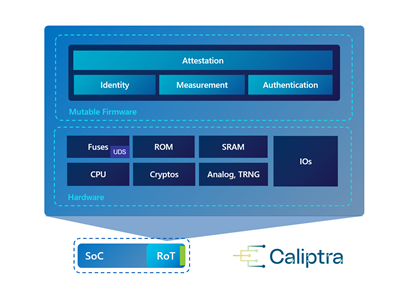
It supplies a novel and unforgeable basis from which a tool builds its security structure and authenticate each computing layer, from hardware to application. This is much like our personal unforgeable biometric identification, such as our fingerprints, from which other forms of identification may be rooted. Open-source implementations like Caliptra and OpenTitan provide an adaptable framework where PQC could be integrated into the safe boot chain and attestation flows. Their transparency and replace mechanisms be certain that as PQC standards evolve, the RoT stays related for gadgets over decades, even towards quantum-capable adversaries. Open-source RoTs are developed by collaborative ecosystems, typically backed by industry leaders, lecturers, and startups.